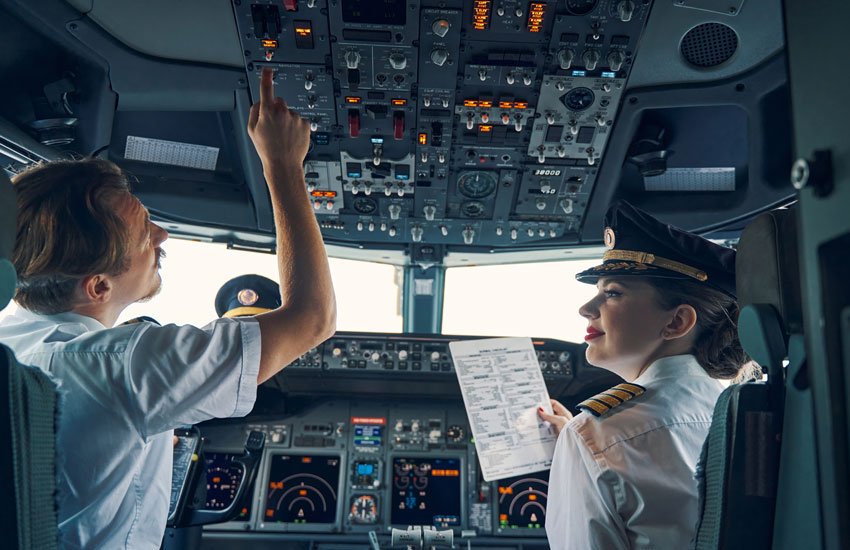
Becoming a pilot is one of the most attractive career options in the aviation industry, but it is also a career that requires significant training, licensing and financial investment. One of the first questions asked by students considering aviation is simple: What is the pilot salary in India? There is no single salary figure that applies to every pilot. A trainee or newly hired First Officer earns considerably less than an experienced airline Captain, while wide-body, international and senior positions can have substantially different compensation structures.
Pilot salary can also include more than basic pay. Depending on the airline and employment contract, total compensation may include flying pay, allowances, layover payments, bonuses and other benefits. Current publicly available salary data illustrates this variation. For example, Glassdoor’s current user-submitted data for IndiGo Pilot/First Officer roles shows a base-pay range of approximately ₹1 lakh–₹3 lakh per month, with an average around ₹2 lakh per month, although individual submissions vary considerably.
Pilot Salary in India
Some current 2026 industry salary guides place airline First Officer compensation in the broad range of roughly ₹2 lakh–₹6 lakh per month, depending heavily on airline, experience and flying hours. Captain compensation can be considerably higher, with some industry estimates placing narrow-body Captains around ₹6 lakh–₹10 lakh or more per month and wide-body international positions potentially higher. These are industry estimates, not standardized government pay scales.
Pilot Salary at a Glance
| Pilot Position | Approx. Monthly Salary* | Typical Career Stage |
| Trainee / Junior First Officer | ₹1.5 lakh–₹2.5 lakh | Entry level |
| First Officer | ₹2 lakh–₹4 lakh | Junior to mid-level |
| Senior First Officer | ₹4 lakh–₹6 lakh | Experienced |
| Captain | ₹6 lakh–₹10 lakh+ | Senior |
| Senior/Wide-Body Captain | ₹10 lakh+ in some roles | Highly experienced |
Pilot Salary Per Month in India
The monthly salary of a pilot is generally made up of several components rather than one fixed payment. A pilot’s compensation may include basic pay, flying-related pay, allowances and other contractual components. The amount actually received in the bank account can therefore be different from the headline salary quoted in recruitment material or online salary reports.
Pilot Salary Structure
| Salary Component | What It Includes |
| Basic Pay | Fixed component of compensation |
| Flying Pay | Payment associated with flying duties or hours, where applicable |
| Allowances | Eligible travel, layover and other allowances |
| Bonus | Performance or contract-based payments where applicable |
| Additional Pay | Other components specified by the employer |
| Deductions | Tax and other applicable deductions |
| In-Hand Salary | Amount received after applicable deductions |
Commercial Pilot Salary in India
A Commercial Pilot Licence (CPL) is an important qualification for anyone seeking a professional flying career in India. However, obtaining a CPL does not automatically mean that a pilot immediately starts earning a high airline salary. After completing training, a candidate still needs to meet airline recruitment requirements and, depending on the role and aircraft, complete additional training or type-rating requirements.
The Directorate General of Civil Aviation (DGCA) requires applicants for flight crew examinations other than the PPL category to have passed 10+2 with Physics and Mathematics or an equivalent qualification.
Commercial pilot salary generally develops in stages:
CPL holder → Trainee/Junior First Officer → First Officer → Senior First Officer → Captain
The speed of this progression depends on employment opportunities, flying experience, airline requirements, seniority and the availability of upgrades.
Also read this: IBPS PO Salary | SSC CGL Salary | SSC CHSL Salary | Merchant Navy Salary
Pilot Salary Based on Rank
First Officer Salary
The First Officer is generally the second pilot in a two-pilot commercial flight deck and works alongside the Captain. A newly hired First Officer’s salary can be significantly different from that of an experienced First Officer. Current public salary submissions for IndiGo show this variation clearly, with reported annual compensation ranging from much lower to substantially higher figures depending on experience and individual circumstances. As a broad 2026 industry reference, junior First Officer compensation can fall around ₹2 lakh–₹4 lakh per month, although actual offers can be outside this range.
Salary can increase with:
- Flying hours
- Seniority
- Aircraft type
- Airline
- Additional responsibilities
- Allowances
- Contract structure
Senior First Officer Salary
A Senior First Officer has accumulated substantially more operational experience than a newly hired pilot. At this stage, compensation can move into a higher salary bracket. Some current aviation industry estimates put experienced First Officer compensation around ₹4 lakh–₹6 lakh per month, although this should be treated as an indicative range rather than a universal salary scale.
Airline Captain Salary
The Captain is the pilot responsible for the overall operation of the flight from the flight-deck leadership perspective.
Captain salary depends on factors such as:
- Airline
- Aircraft type
- Seniority
- Flying hours
- Domestic or international operations
- Contract
- Allowances
- Fleet
Industry salary guides for 2026 commonly place experienced narrow-body Captain compensation in the ₹6 lakh–₹10 lakh+ monthly range, while some wide-body international positions can exceed that level.
Senior Captain Salary
Senior Captains with substantial experience may earn more than newly upgraded Captains.
The difference can be influenced by:
- Seniority within the airline
- Aircraft type
- International operations
- Flying allowances
- Leadership or training responsibilities
- Contractual benefits
Pilot Salary Based on Experience
However, it is not accurate to assume that every pilot automatically receives a predetermined salary after a particular number of years. Promotion and compensation depend on the airline and the pilot’s career progression.
Pilot Salary by Experience
| Experience | Typical Position | Major Salary Factors |
| 0–2 Years | Trainee/First Officer | Airline, training, flying hours |
| 3–5 Years | First Officer | Experience, aircraft, seniority |
| 6–10 Years | Senior First Officer/Captain | Rank, fleet and upgrade |
| 10+ Years | Captain/Senior Captain | Airline, seniority, aircraft and route |
Airline Pilot Salary in India
Airline pilot salary varies considerably between carriers. The same job title does not necessarily mean identical compensation at every airline. A First Officer at one airline may have a different base salary, flying-pay structure, allowances and benefits from a First Officer at another. For example, publicly available 2026 data for IndiGo First Officers shows an average base pay around ₹2 lakh per month on Glassdoor, but submitted salaries range widely.
Pilot Salary by Airline
| Airline | Pilot Compensation Depends On |
| IndiGo | Rank, aircraft, seniority, flying and contract |
| Air India | Rank, fleet, experience, domestic/international operations |
| Akasa Air | Rank, aircraft, experience and employment terms |
| SpiceJet | Rank, fleet, flying and contract |
| Other Airlines | Employer-specific salary and allowance structure |
Pilot Salary by Type of Pilot
Not all pilots work for commercial airlines. Salary can vary substantially according to the type of flying job.
| Pilot Type | Typical Employer | Major Salary Factors |
| Commercial Airline Pilot | Passenger airlines | Rank, aircraft, seniority |
| Private Pilot | Private operators | Employer, aircraft, flying |
| Cargo Pilot | Cargo airlines | Aircraft, route, experience |
| Helicopter Pilot | Charter, utility and other operators | Experience, aircraft and operation |
| Fighter Pilot | Indian Armed Forces | Military rank and government pay structure |
| Flight Instructor | Flying schools | Flying hours, qualifications and experience |
Pilot Allowances and Benefits
Pilot compensation may include several benefits beyond basic salary.
Common components can include:
Flying Allowance
Some airline compensation structures include payments related to flying duties or hours.
Layover Allowance
Pilots operating flights that require overnight stays away from their base may receive applicable layover or per-diem allowances.
Travel Benefits
Airlines may provide travel-related benefits to employees, although the exact rules vary by employer.
Accommodation-Related Benefits
Depending on the airline and duty pattern, accommodation or hotel arrangements may be provided during official layovers.
Medical Benefits
Health insurance or medical benefits may be included as part of an employment package.
Performance or Other Bonuses
Some contracts may include bonuses or additional payments subject to specific conditions. It is important to remember that allowances should not automatically be added to basic salary when comparing two jobs. Some allowances may be reimbursed expenses rather than guaranteed monthly income. Historical government-published aviation data also illustrates how pilot compensation can contain multiple allowances beyond headline pay.
Pilot Salary: Gross vs In-Hand Salary
One of the most common mistakes when researching pilot salary is confusing gross salary, CTC and in-hand salary.
Gross Salary
Gross salary generally refers to earnings before deductions.
CTC
Cost to Company can include components that are not directly deposited into the employee’s bank account every month.
In-Hand Salary
In-hand salary is the amount actually received after applicable deductions.
Why Is the Difference Important?
Suppose a job advertisement mentions an annual package of ₹36 lakh. That does not necessarily mean the pilot will receive ₹3 lakh directly in the bank every month.
Taxes, employee contributions, contractual deductions and the structure of allowances can change the final amount.
Therefore, when comparing pilot salary per month, always check whether the quoted figure is:
- Basic salary
- Gross salary
- CTC
- Total compensation
- In-hand salary
This distinction is particularly important when evaluating airline job offers.
Pilot Training Cost in India
The high cost of pilot training is an important part of the career decision. The Government has clarified that DGCA approves Flying Training Organisations but does not regulate the financial aspects of obtaining a CPL; training costs are determined by individual FTOs. Published 2026 fee information varies considerably. For example, one current flying school lists a CPL package at around ₹61 lakh, while other industry guides put a complete CPL journey broadly around ₹55 lakh–₹80 lakh depending on what is included.
Therefore, students should obtain a detailed written fee breakdown before joining a flying school.
Typical Pilot Training Expenses
- Flying training
- Ground school
- DGCA examinations
- Medical examinations
- Licence-related expenses
- Radio-telephony requirements
- Accommodation and living expenses
- Books and equipment
- Additional flying hours
- Type rating, where applicable
Pilot Training Cost vs Salary
| Career Stage | Main Financial Consideration | Income Situation |
| Student Pilot | CPL training investment | Usually training phase |
| CPL Holder | Further airline preparation | Employment not guaranteed |
| Junior First Officer | Recovery of training investment begins | Entry-level professional income |
| Senior First Officer | Experience and flying increase | Higher earning potential |
| Captain | Significant career progression | Higher compensation potential |
How to Become a Pilot in India
The route to becoming a commercial pilot involves several stages.
Step-by-Step Process
1. Complete the required education
For DGCA flight crew examination registration, applicants other than the PPL category generally need 10+2 with Physics and Mathematics or an equivalent qualification.
2. Complete the required medical examination
Medical fitness is an important part of professional pilot training and licensing.
3. Choose an appropriate DGCA-approved training pathway
Students should carefully verify the current approval status of the Flying Training Organisation.
4. Complete ground training
This includes subjects required for commercial pilot licensing.
5. Complete flight training
The CPL pathway involves substantial practical flying training. IGRUA, for example, states that its CPL programme includes 200 hours of flying training along with instrument rating and multi-engine training in accordance with DGCA requirements.
6. Pass the required examinations
Candidates must meet the applicable examination and licensing requirements.
7. Obtain the CPL
After satisfying the applicable DGCA requirements, the candidate can obtain the Commercial Pilot Licence.
8. Complete airline-specific requirements
Depending on the employer and aircraft, additional training or type-rating requirements may apply.
9. Apply for airline positions
Candidates can then pursue First Officer or other suitable opportunities.
10. Build experience and progress
The long-term career path can lead toward Senior First Officer and Captain positions.
Pilot Eligibility in India
Eligibility requirements can vary depending on the exact licence and regulatory pathway, but educational qualifications are an important starting point. DGCA’s current examination FAQ states that applicants other than PPL candidates must have passed 10+2 with Physics and Mathematics from a recognized board or university, or hold an equivalent qualification.
Important areas include:
- Educational qualification
- Physics and Mathematics
- Medical fitness
- DGCA examination requirements
- English proficiency requirements
- Flying training
- Licensing requirements
Candidates should always check the latest DGCA requirements before enrolling because aviation regulations and procedures can change.
Pilot Salary vs Other Aviation Careers
| Aviation Career | Main Salary Factors | Career Path |
| Pilot | Rank, airline, aircraft, seniority | First Officer → Captain |
| Cabin Crew | Airline, experience, role | Crew → Senior Crew |
| Aircraft Engineer | Licence, specialization, experience | Engineer → Senior Engineer |
| Air Traffic Controller | Grade, experience and government pay structure | Controller → Senior Roles |
| Flight Instructor | Flying hours and qualifications | Instructor → Advanced Aviation Roles |
Highest-Paying Pilot Roles
Pilot compensation tends to increase as responsibility, experience and aircraft complexity increase.
Roles that can command higher compensation may include:
- Experienced airline Captains
- Senior Captains
- Wide-body aircraft pilots
- International airline pilots
- Specialized aviation roles
However, there is no universal salary for these positions.
For example, current industry estimates suggest that some wide-body Captain positions can reach ₹10 lakh–₹16 lakh or more per month, but these are indicative figures and depend heavily on the employer, fleet and compensation structure.
The headline salary should therefore always be checked against the actual employment contract.
Pros and Cons of a Pilot Career
Advantages
Strong Career Progression
The aviation industry offers a structured pathway from First Officer to Captain for pilots who meet the relevant requirements.
Potential for Higher Earnings
Experienced airline Captains can earn substantially more than entry-level pilots.
Aviation Industry Exposure
Pilots work in a highly specialized and technically demanding environment.
Travel Opportunities
Commercial aviation can provide opportunities to operate domestic and international routes.
Challenges
High Training Cost
Pilot training can require an investment of tens of lakhs of rupees.
Medical Requirements
Pilots must continue meeting applicable medical requirements.
Irregular Working Hours
Early mornings, nights, weekends, holidays and extended duty periods can be part of airline operations.
High Responsibility
Pilots carry significant operational responsibility for flight safety and decision-making.
Competition
Obtaining an airline position after completing training is not guaranteed.
Conclusion
Pilot salary in India can range from a relatively modest entry-level package to very high compensation at the senior Captain level. The biggest factors are rank, experience, airline, aircraft type, seniority, flying hours and the structure of allowances. A First Officer starting an airline career should not compare their salary directly with that of a senior Captain because the two positions involve very different levels of experience and responsibility. Similarly, CTC, gross salary and in-hand salary should always be separated when evaluating an offer.
The financial side of the profession also deserves careful consideration. Pilot training can cost tens of lakhs of rupees, and the exact amount depends on the Flying Training Organisation, flying hours, additional training and other expenses. The Ministry of Civil Aviation has noted that CPL training costs are determined by individual FTOs rather than regulated financially by DGCA.
FAQs
1.What is the average pilot salary in India?
There is no single official average covering every type of pilot. Salary varies by rank, airline, aircraft, experience and compensation structure. Current industry and employee-submitted data shows First Officer salaries can range from around ₹2 lakh per month upward, while experienced Captains can earn considerably more.
2.What is a pilot’s starting salary?
A trainee or junior airline First Officer may earn roughly ₹1.5 lakh–₹2.5 lakh per month according to some 2026 industry estimates, although actual starting packages vary by airline and employment arrangement.
3.How much does a commercial pilot earn per month?
A commercial airline pilot can earn anywhere from the lower lakh-per-month range at the beginning of an airline career to significantly higher amounts after progressing to Captain. Airline, aircraft, seniority and flying-related compensation all influence the final amount.
4.What is the salary of an airline Captain in India?
Current 2026 industry estimates commonly place experienced narrow-body Captain compensation around ₹6 lakh–₹10 lakh or more per month, while some wide-body international positions can be higher. These figures should be treated as indicative rather than guaranteed.
5.What is the salary of a First Officer?
First Officer salary varies by airline and experience. Current public IndiGo salary submissions on Glassdoor show approximately ₹1 lakh–₹3 lakh per month in base pay across submitted data, with an average of around ₹2 lakh per month.
6.Do pilots get paid during training?
It depends on the training and employment arrangement. A student paying for CPL training should not assume that the training period is equivalent to being employed as an airline pilot.





One Comment